European Certified Small Diggers: A Overview to Conformity
European Certified Small Diggers: A Overview to Conformity
Blog Article
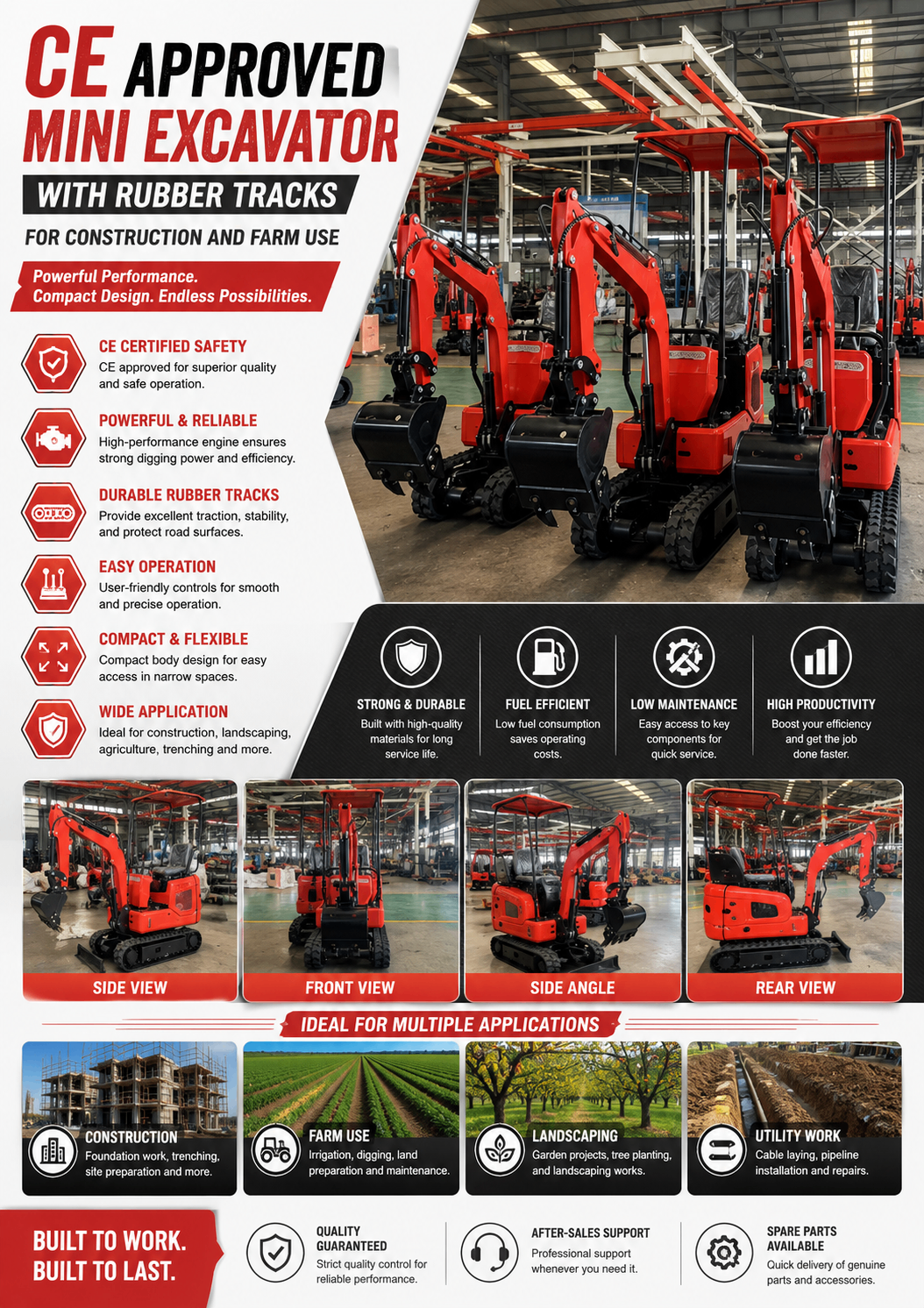
Ensuring your mini excavator meets European approval requirements is essential for market within the EU. Our overview details the key aspects of CE certification for compact tracked machines, including directives related to safety, construction equipment evaluation, and records. Knowing the rules allows operators to correctly operate their machinery and avoid potential legal action.
Specialized Track Mini Machines: Superior Pull for Challenging Ground
Mini machines equipped with composite tracks are revolutionizing how contractors work with projects in uneven conditions. Unlike traditional tire-equipped models, these adaptable machines offer exceptional pull on slippery surfaces like gravel, snow, and uneven grades. This greater balance allows operators to complete work effectively and efficiently, lessening downtime and maximizing output. The yielding nature of rubber tracks also reduces ground impact, preserving delicate surfaces and minimizing site disturbance.
Mini Excavators: Big Performance in Confined Construction Areas
These capable smaller excavators provide a notable approach for tasks where traditional equipment easily work. Their limited profile allows access to challenging areas, like underground systems or Mini hydraulic excavator among established buildings. Despite their dimensions, they boast substantial digging force and precision, allowing them perfect for a broad scope of construction functions. Ultimately, mini excavators embody a efficient asset for developers facing the difficulties of restricted job-sites.
Compact Machines for Properties: Flexibility and Effectiveness in Farming Tasks
Modern farming operations often require equipment that can handle a scope of difficult jobs. Compact diggers are quickly becoming invaluable assets for producers, offering exceptional adaptability and performance across a numerous array of farming duties. From trenching for irrigation networks and drainage to shifting earth for creating fences or terraces , these machines provide a capable solution. They also excel at clearing land for planting , leveling fields , and processing substances with ease . Their small footprint allows them to work in limited locations that larger vehicles simply cannot navigate.
- Digging for Irrigation
- Relocating Soil
- Removing Land for Planting
Picking the Appropriate Mini Machine for Building vs. Farm Uses
When choosing a mini excavator , it's essential to recognize the significant differences between construction projects and farm endeavors. Building sites often require more power , precision , and the capacity to function in tight spaces . Therefore , a powerful model with a extensive range of attachments might be preferable. Conversely , rural properties frequently involve minimal digging distances , more landscape grading , and the requirement for compact equipment to move through open areas. In conclusion, detailed assessment of the anticipated assignments is paramount for securing the suitable choice .
- Think about excavation distances .
- Evaluate the space limitations .
- Consider the necessary attachments .
- Take into account moving challenges .
{CE Certification & Mini Excavators : What You Need to Know
Ensuring your {mini compact machine is compliant relevant European directives is crucial, and that's where {CE certification comes with. This symbol demonstrates that the device has been assessed and meets safety requirements, allowing free movement within the EU. {For owners of these machines, understanding CE certification is important. It isn't simply about having a mark on the digger; it represents a evaluation of design and functionality.
- Check the existence of the CE identification.
- Review the declaration of conformity – this details the guidelines the digger meets.
- Think about that CE certification is the maker's responsibility – though operators must be cognizant of its significance.